
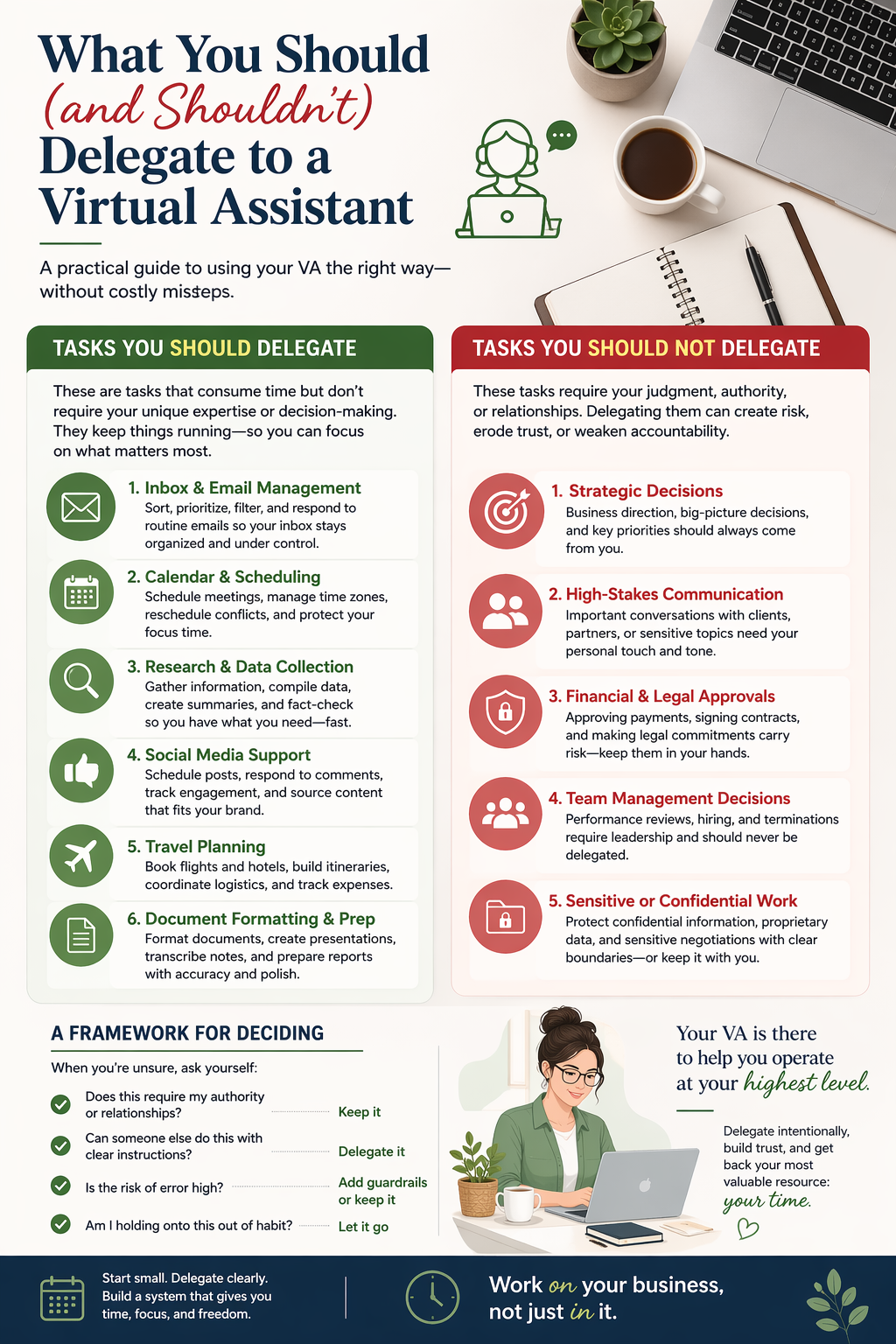
What You Should (and Shouldn’t) Delegate to a Virtual Assistant
A practical guide to using your VA the right way—without costly missteps
Bringing on a virtual assistant is a smart move. You’ve likely done the research, asked the right questions, and found someone who fits your business. But here’s where many people get stuck:
What exactly should you delegate?
Delegation sounds simple—but doing it well requires clarity and intention. Hand off the wrong tasks, and you risk frustration, miscommunication, or even damaging important work. Delegate the right ones, and you create space for focus, growth, and higher-level thinking.
Let’s break it down.
Tasks You Should Delegate
These are the tasks that take up your time but don’t require your unique expertise or decision-making.
1. Inbox & Email Management
Your inbox can quietly drain hours of your day. A VA can take control by:
- Organizing and prioritizing emails
- Drafting routine replies
- Filtering spam and unsubscribing from clutter
- Flagging urgent messages for your attention
With the right system, this alone can save you 60–70% of your email time.
2. Calendar & Scheduling
Scheduling is necessary—but it shouldn’t be your job.
A VA can:
- Book and confirm meetings
- Manage time zones
- Reschedule conflicts
- Protect your focus time and personal commitments
3. Research & Data Collection
Whether it’s competitors, vendors, or travel options, research is time-consuming but easy to delegate.
Your VA can:
- Gather and organize information
- Create summaries or spreadsheets
- Research contacts or companies
- Verify sources and facts
4. Social Media Support
Showing up online matters—but you don’t have to do it all yourself.
With clear guidelines, your VA can:
- Schedule and post content
- Respond to basic comments and messages
- Track engagement
- Find relevant content to share
5. Travel Planning
Travel logistics can quickly become overwhelming.
A VA can:
- Book flights, hotels, and transportation
- Build detailed itineraries
- Coordinate with event organizers
- Track receipts for expenses
6. Document Formatting & Prep
If the content comes from you, the execution doesn’t have to.
Delegate tasks like:
- Formatting reports
- Creating presentations
- Transcribing notes
- Preparing documents
Tasks You Should Not Delegate
Not everything should leave your hands. Some responsibilities require your voice, judgment, and authority.
1. Strategic Decisions
Your business direction should always come from you.
A VA can gather data—but you make the final call.
2. High-Stakes Communication
Messages involving key clients, partners, or sensitive topics need your personal touch.
Templates can’t replace trust—and one impersonal message can damage a strong relationship.
3. Financial & Legal Approvals
Approving payments, signing contracts, and making legal commitments carry real risk.
Even with trust, accountability must stay with you.
4. Team Management Decisions
Performance reviews, hiring, and firing decisions require leadership—not delegation.
These conversations matter—and they should come directly from you.
5. Sensitive or Confidential Work
Be mindful of what access you give.
Tasks involving:
- Client financials
- Intellectual property
- Confidential negotiations
…should either stay with you or be handled with strict boundaries.
A Simple Framework for Delegation
Not sure what to hand off? Ask yourself:
- Does this require my authority or relationships? → Keep it
- Can someone else do this with clear instructions? → Delegate it
- Is the risk of error high? → Add guardrails or keep it
- Am I holding onto this out of habit? → Let it go
The Real Goal: Protect Your Time
A virtual assistant isn’t just there to “help out.”
They’re there to help you operate at your highest level.
Every hour you spend on low-value tasks is time taken away from:
- Growth
- Strategy
- Revenue-generating work
Start small. Delegate a few clear tasks. Build trust. Then expand.
Over time, delegation becomes more than a task—it becomes a system that gives you back your most valuable resource:
Your time.